
Last updated: March 31, 2026
Introducing Signals: AI Personality Insights for Real Estate Agents
Signals is the first AI personality assessment built specifically for real estate agents. It analyzes an agent’s actual call recordings to build a DISC personality profile – surfacing their core motivators, fears, conflict style, and social orientation – then generates coaching recommendations tailored to how that individual actually communicates. Every insight is cited back to specific calls with confidence scores. It’s not a quiz. It’s not a theory. It’s a complete personality decode built from real conversations.
If you’ve ever given the same coaching advice to two different agents and watched one light up while the other checks out, Signals is the reason why – and the fix.
Your Agents Are Unique. Your Coaching Isn’t.
Here’s what 21 years of analyzed talk time taught us: the same coaching advice lands completely differently depending on who’s hearing it.
Tell a high-Dominance agent to “slow down and build more rapport” and they hear “waste time on small talk.” Tell a high-Steadiness agent to “be more assertive on the close” and they hear “be someone you’re not.” The advice isn’t wrong. It’s just aimed at the wrong personality.
Most coaching programs – whether it’s a sales manager doing 1-on-1s, a script library, or another AI tool – deliver the same feedback to every agent. Same scripts. Same objection handlers. Same tone. And then we wonder why only a handful of agents actually improve.
The answer was always personality. We just didn’t have a way to decode it at scale – until now.
What Signals Shows You
Every agent in your organization gets a full personality profile – automatically generated from their call recordings. No surveys to fill out. No assessments to schedule. Shilo builds it from the conversations they’re already having.
The DISC Profile
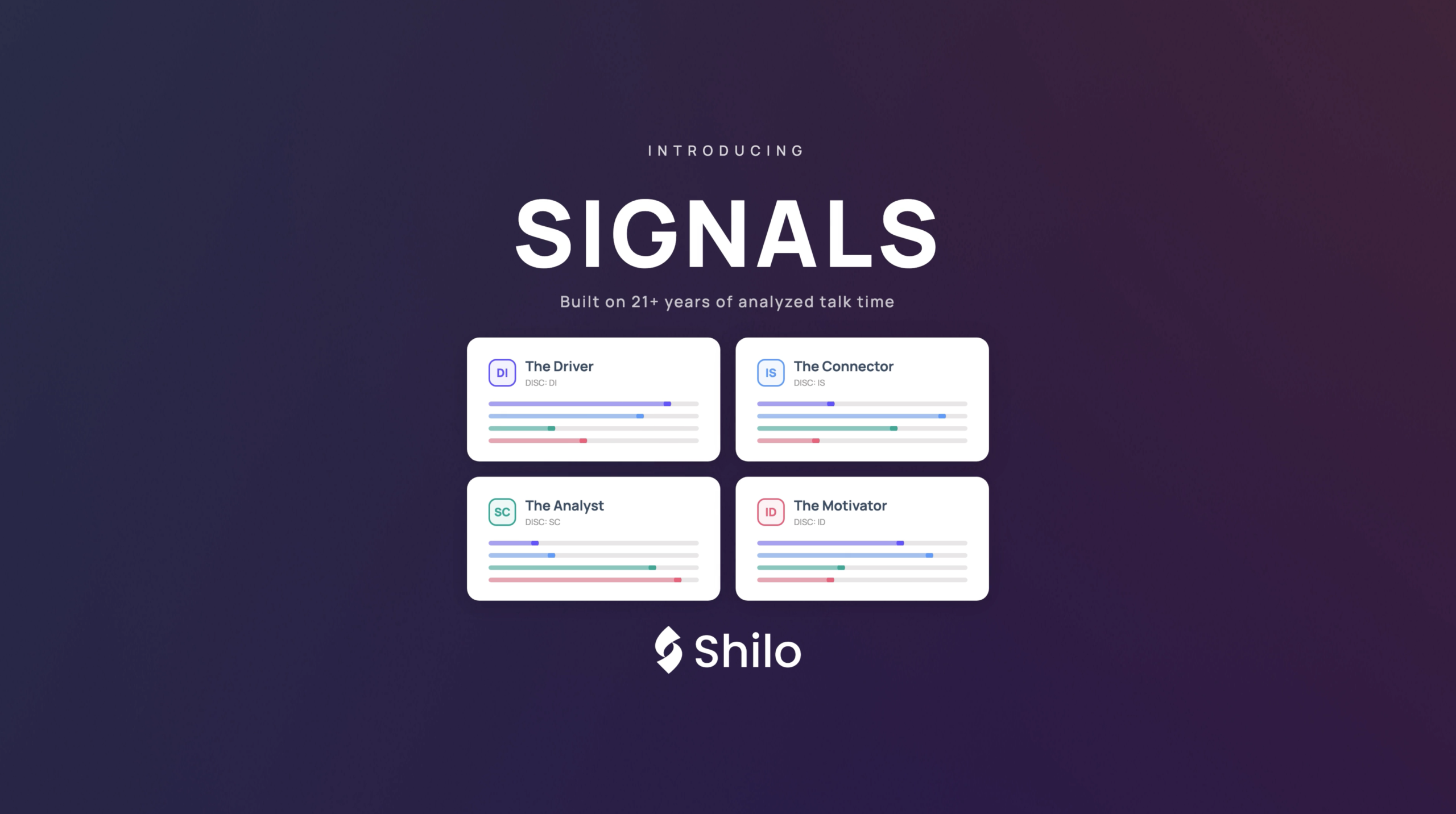
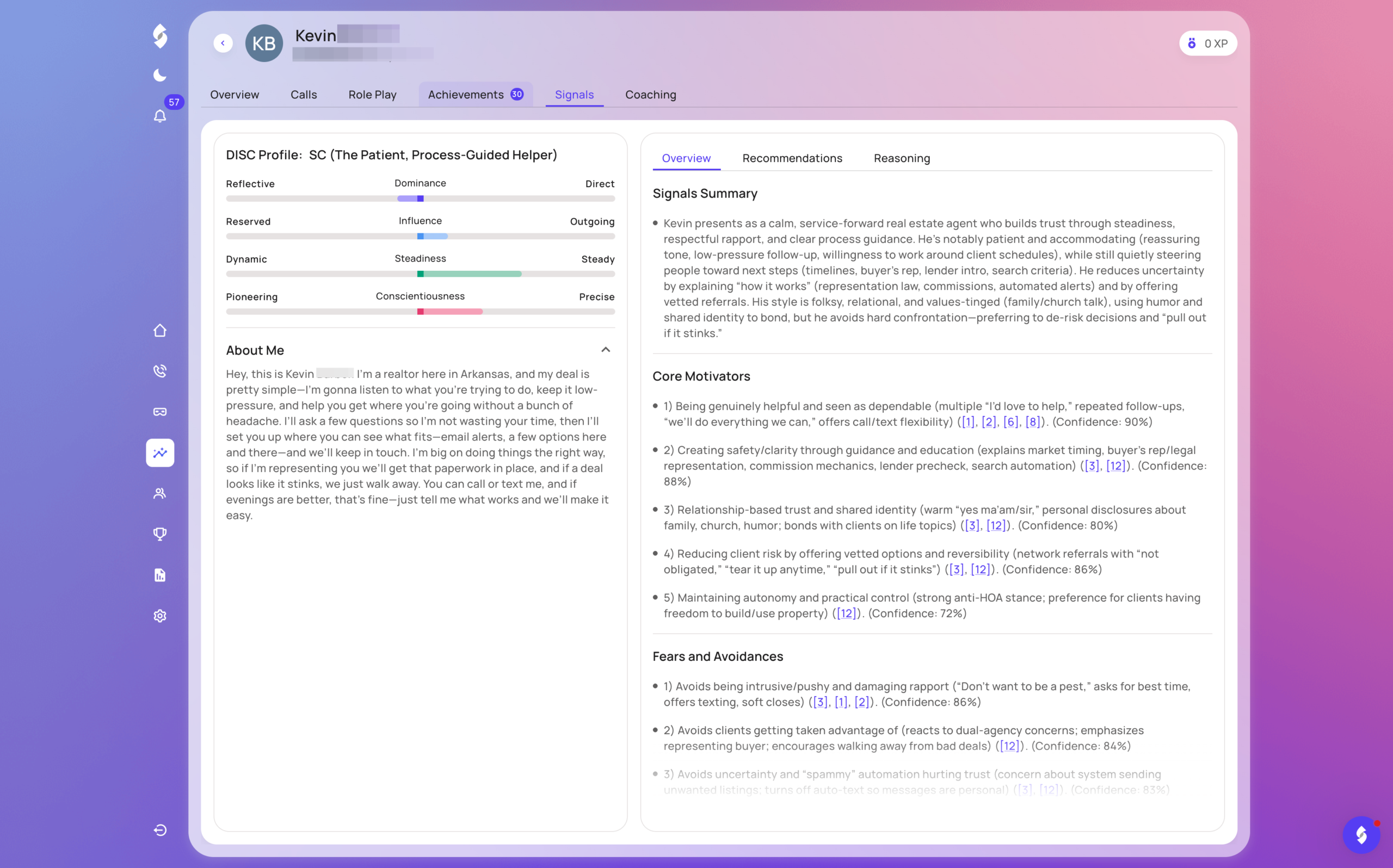
The foundation of every Signals profile is a DISC assessment across four behavioral dimensions: Dominance, Influence, Steadiness, and Conscientiousness. Each trait is mapped on a spectrum bar showing exactly where that agent falls – not just a binary “you’re a D” label, but a nuanced picture of how much of each trait shows up in their communication.
Agents are classified with a combined type that captures their primary and secondary traits. A “CS – The Structured Stabilizer” communicates differently than a “DI – The Driver” or an “IS – The Connector.” Those differences matter when you’re deciding how to coach them.
About Me and Signals Summary
Beyond the trait bars, Signals generates a narrative personality summary for each agent – written in plain language, not psychometric jargon. For example, an agent profiled as CS (The Structured Stabilizer) might get:
“Hey I’m Sarah! I’m someone who leads with clarity and follow-through. I’d rather take the time to get it right than rush and miss details. Give me a plan, a process, and room to be thorough – that’s where I do my best work.”
The Signals Summary adds a behavioral layer on top: how this agent communicates on calls, what approach they respond to, and what style of interaction builds trust with them. Each summary includes a confidence score (based on how much call data the profile is built from) and the number of conversations analyzed.
Core Motivations, Fears, and Conflict Style
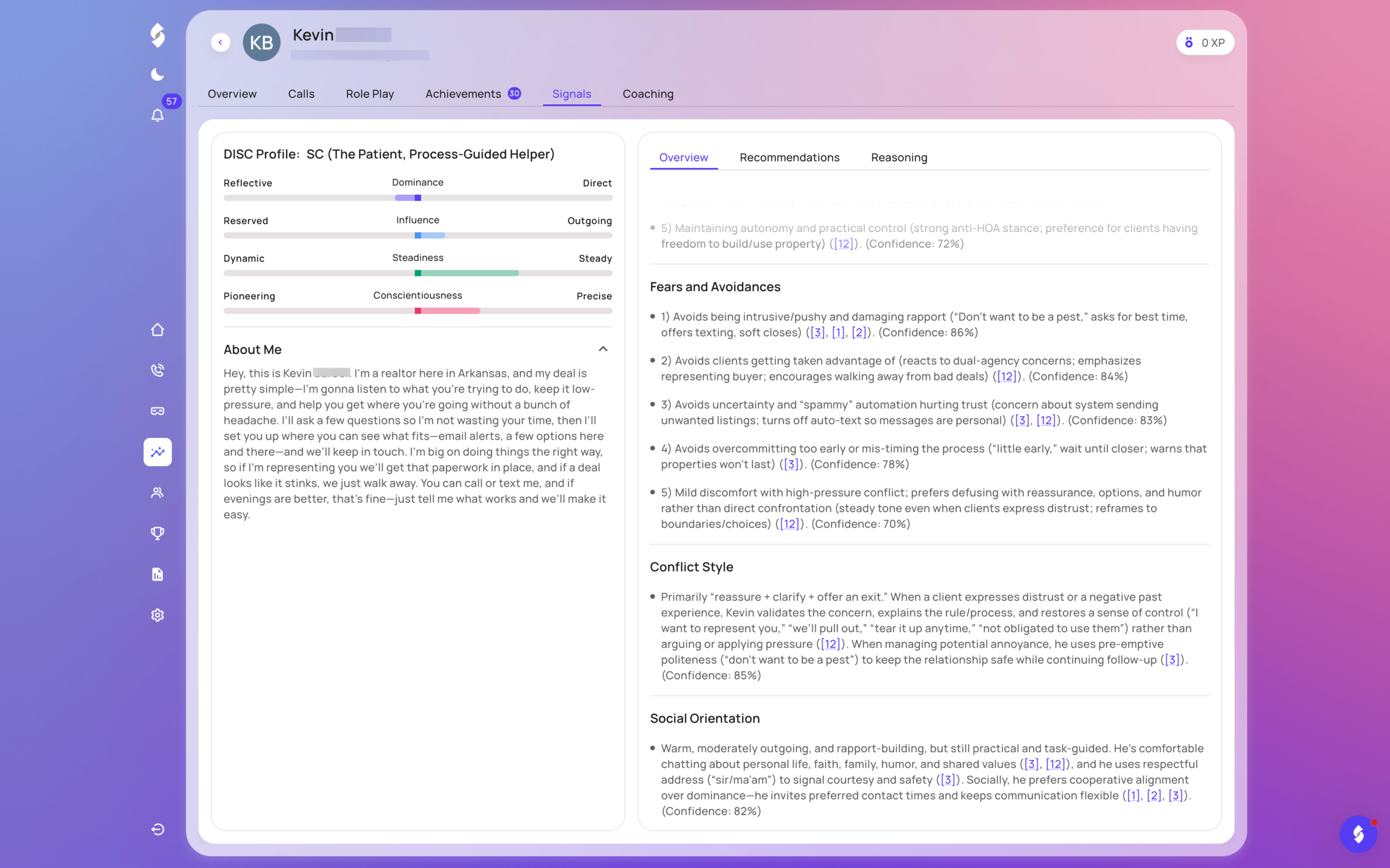
This is where it gets granular. Signals surfaces what drives each agent (accuracy, consistency, recognition, autonomy), what triggers resistance (ambiguity, rapid change, micromanagement), and how they handle disagreements (confrontational vs. diplomatic, emotional vs. data-driven).
Each insight comes with an intensity label and a confidence score. And critically, each one is cited back to specific calls – you can trace any personality insight to the actual conversations that surfaced it.
Personalized Recommendations
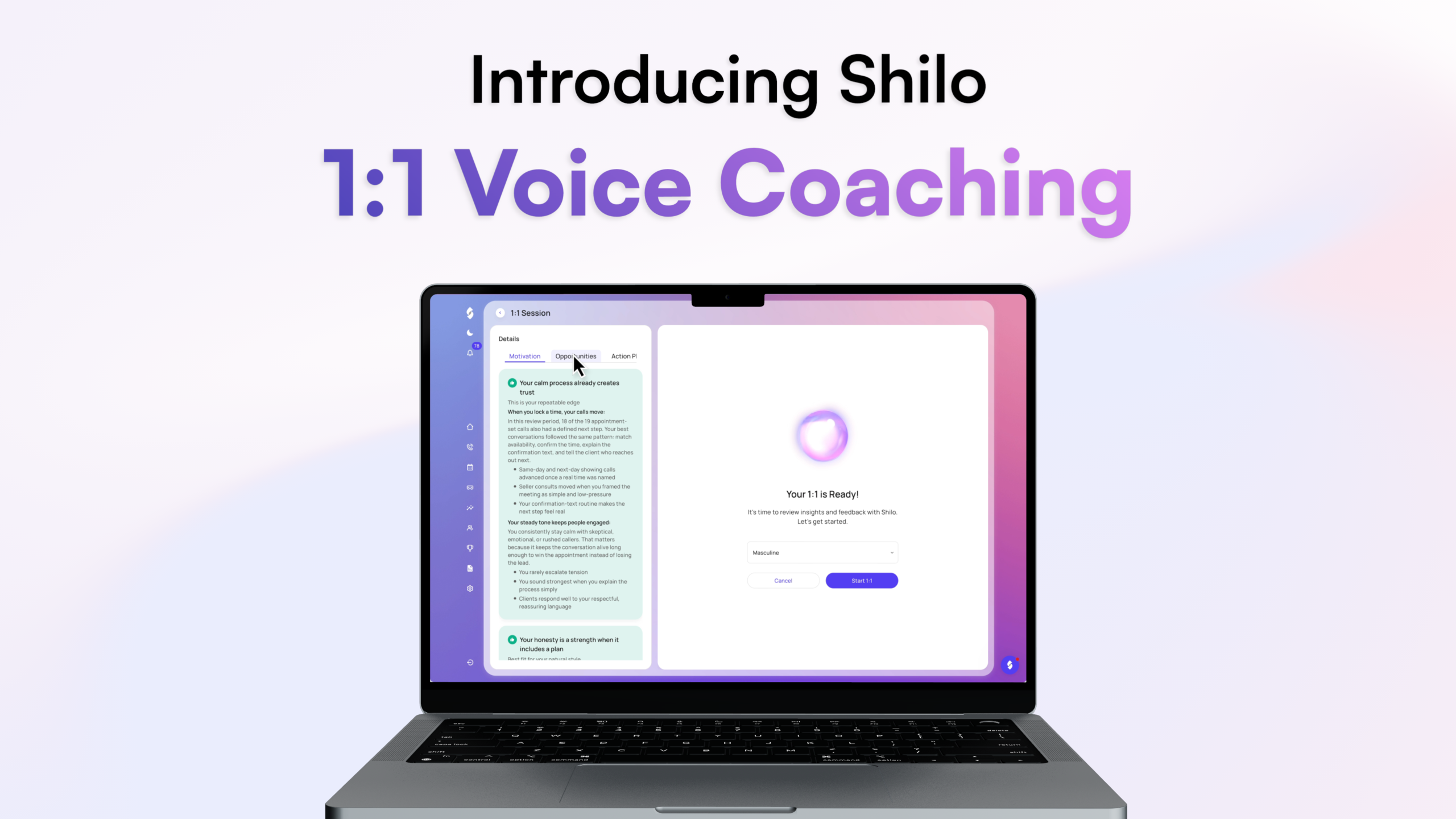
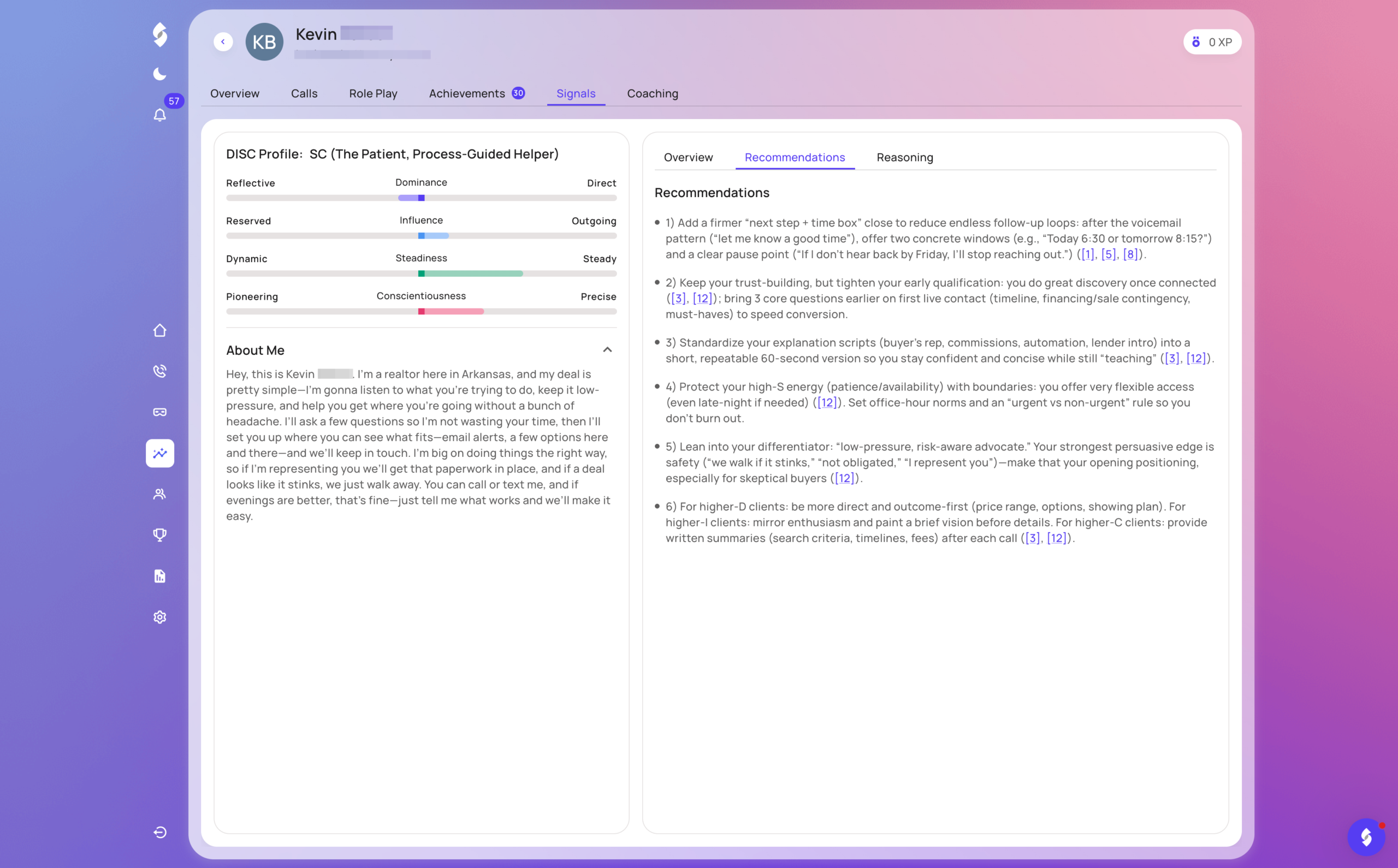
This is the payoff. Signals doesn’t just profile an agent and leave you to figure out what to do with it. It generates specific, actionable coaching recommendations tailored to that agent’s personality.
Not “improve your objection handling.” More like this:
Or: “End every conversation with exactly three things: what you’ll send, what they’ll do, and by when – then lock the follow-up before you hang up.”
These aren’t generic tips pulled from a coaching playbook. They’re generated from the intersection of who this agent is and what their call data actually shows. Different agents get different recommendations – because they need different things.
How Signals Is Different From a DISC Assessment
If you’ve used DISC before – and most team leaders have at some point – you might be thinking “we’ve done personality assessments.” Here’s how Signals is fundamentally different from a traditional DISC assessment:
| Traditional DISC Assessment | Shilo Signals | |
|---|---|---|
| Data source | Self-reported questionnaire | Actual call recordings |
| Sample size | One sitting, 15-20 minutes | Weeks or months of real conversations |
| Evidence | “I think I’m a…” | Cited to specific calls with confidence scores |
| Coaching output | Generic type description | Hyper-specific recommendations from real call data |
| Updates | Static (one-time snapshot) | Evolves continuously as more calls are analyzed |
| Cost | Separate assessment + coaching program | Included with Shilo |
The biggest difference: a traditional DISC assessment tells you who an agent thinks they are. Signals shows you who they actually are on the phone – backed by evidence you can verify.
Built on 21 Years of Analyzed Talk Time
Every insight in a Signals profile includes citation markers linking back to the specific calls that surfaced it. Team leaders can click into the Reasoning tab to see the evidence behind any personality trait or recommendation. Confidence scores tell you how strong the signal is – a 94% confidence on a Signals Summary built from 47 conversations is a very different thing than a gut feeling about how an agent “seems.”
The profiles aren’t static, either. As agents make more calls, Signals refines and updates their profile. An agent’s personality doesn’t change overnight, but the model’s understanding of it gets sharper with more data.
What This Means for Team Leaders
You can finally coach to the person, not the script. A high-D agent and a high-S agent sitting in the same team meeting are hearing two completely different things. With Signals, you know who needs the direct “here’s the fastest path” approach and who needs the structured “here’s the plan, step by step” approach. Before you walk into the 1-on-1.
It scales. A sales manager can personally coach 10-15 agents well. Past that, the nuance breaks down. You default to one coaching style – usually your own personality style – and half your team gets advice that doesn’t match how they process information. Signals gives every agent on your team a personalized coaching profile, whether you have 5 agents or 500. No extra headcount. No extra hours.
If you’ve read our breakdown of the invisible coaching gap or our study on defined next steps and close rates, this is the next piece. Seeing the problem was step one. Coaching each agent based on who they actually are – that’s where it goes from insight to action.
See Your Agents’ Signals
Signals is live now for all Shilo customers. If you’re already on the platform, open any agent’s profile and look for the Signals tab. If you’re not on Shilo yet, book a demo and we’ll walk through Signals with your actual team data.

Frequently Asked Questions
What is DISC personality Insights for real estate agents?
DISC personality Insights for real estate agents identifies each agent’s communication style across four behavioral dimensions: Dominance, Influence, Steadiness, and Conscientiousness. Shilo Signals builds these profiles automatically by analyzing agents’ actual call recordings rather than relying on self-reported questionnaires. The resulting profile surfaces core motivators, fears, conflict style, and social orientation, then generates coaching recommendations tailored to how each agent naturally communicates.
How does AI personality assessment work from call recordings?
Shilo Signals analyzes patterns across weeks or months of an agent’s real conversations to build a DISC personality profile. Rather than asking agents to self-report their traits in a single sitting, the AI identifies behavioral patterns from how agents actually communicate – their pace, language choices, objection handling style, and rapport-building tendencies. Every personality insight is cited back to specific call recordings with confidence scores, so team leaders can verify the assessment against real evidence.
Can personality Insights actually improve real estate agent performance?
Yes. The core insight is that different personality types respond to different coaching approaches. A high-Dominance agent who wants the fastest path forward will disengage when given process-heavy coaching, while a high-Conscientiousness agent needs detailed frameworks to feel confident. Signals gives team leaders the specific coaching language and approach that matches each agent’s personality, replacing one-size-fits-all advice with recommendations built for how each individual actually processes information.
What DISC personality types are most common among real estate agents?
Real estate attracts a range of DISC types, though the industry tends to skew toward higher Influence and Dominance traits. Shilo Signals identifies agents across the full DISC spectrum with combined types like DI (The Driver), IS (The Connector), SC (The Analyst), CS (The Structured Stabilizer), ID (The Motivator), and CD (The Perfectionist). The distribution varies by team and market, which is exactly why personality-decoded coaching matters – no two teams have the same personality makeup.
How is AI-based personality coaching different from generic sales coaching?
Generic sales coaching gives every agent the same scripts, the same objection handlers, and the same feedback regardless of who they are. AI-based personality coaching through Shilo Signals adapts recommendations to each agent’s DISC profile. For example, instead of a generic “ask for the appointment” tip, Signals might tell a high-S agent to frame the ask as a collaborative next step, while advising a high-D agent to be direct and offer two time slots. Every recommendation is evidence-based, cited to the agent’s actual calls, and scored with confidence percentages.