
Indiana migration, mapped
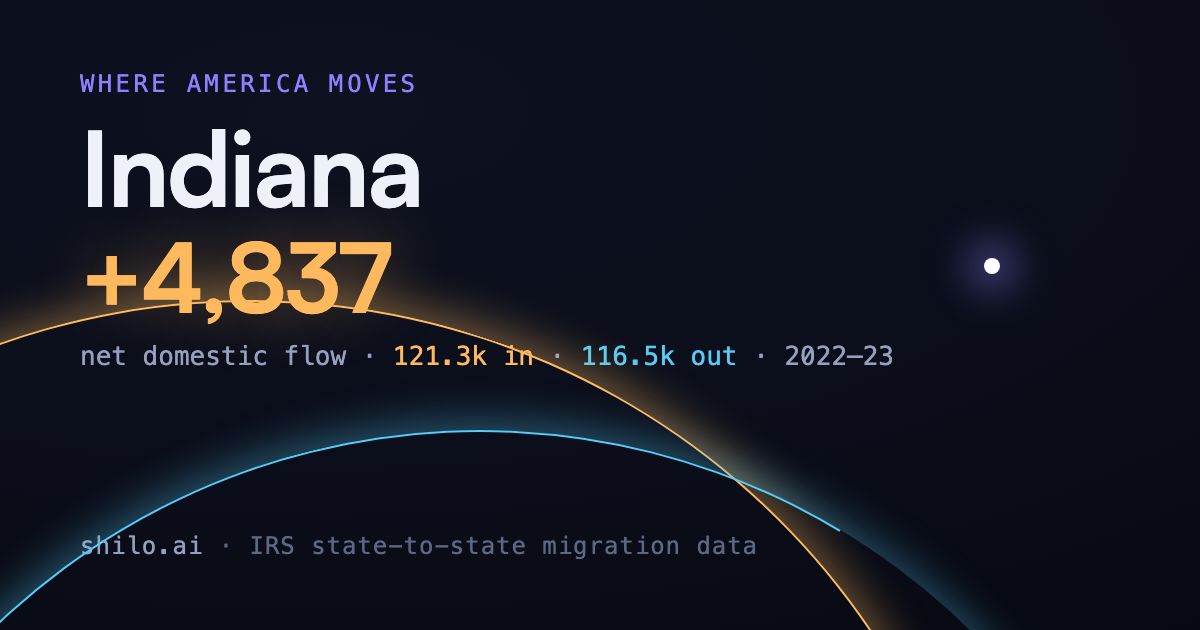
In 2022–23, 121,307 people moved into Indiana and 116,470 moved out, a net of +4,837. Drag the year slider to watch the trend, hover any state to see the corridor, or click through to explore it.
The map couldn’t load. The numbers below still tell the story.
† IRS methodology change in this year’s files (see methodology)
What the flows say
- Biggest corridors: Illinois leads both directions, with 22,165 people in and 16,199 out in 2022–23.
- Trend: net inflow has cooled over the last three years, from +10,963 in 2020–21 to +4,837 in 2022–23†.
Population · 2025
6,973,333
▲ 0.6% year over year · growing
Peak population
6,973,333
highest in the series shown (since 1910)
Why the population is changing
- Growth driver: growth is led by international migration (+17,852); domestic migration added +12,197 in 2025.
- Peak population: the 2025 estimate of 6,973,333 is the highest on record, in data going back to 1910.
Net income flow · 2022–23
−$326M
▼ $4.5B arrived · $4.8B left
Avg household income · movers
$64k in · $68k out
leavers out-earn arrivals by 6%
Indiana wealth migration
- Money moved: households moving into Indiana in 2022–23 reported $4.5B in income (AGI). Households leaving took $4.8B with them, a net loss of $326M.
- Income gap: the average household moving in reported $64k of income, vs $68k for leavers. Leavers out-earn arrivals by 6%.
Drill into a metro
IRS data goes deeper than states. Pick a metro to see its own corridors.
- Indianapolis 2,205,695 people
- Fort Wayne 466,258 people
- South Bend 324,538 people
- Evansville 273,786 people
- Lafayette 228,468 people
- Elkhart 208,774 people
- Terre Haute 169,241 people
- Bloomington 165,231 people
- Muncie 113,106 people
- Michigan City 111,294 people
- Columbus 85,729 people
- Kokomo 83,904 people
About the data
Migration figures come from the official IRS state-to-state files (exemptions ≈ people). Population figures are Census Bureau estimates, and the peak checks every census back to 1910. Income figures are the total income (AGI) movers reported in the same IRS files. Dollars are not adjusted for inflation, and household averages divide by the number of returns. Years marked † had a change in how the IRS built the files. Full details, caveats, and a suggested citation on the methodology page.
Download this data (CSV), free to use with attribution.
Every year, thousands of people move to Indiana
They all start with a call to an agent. Shilo's AI grades your calls and coaches you, so that call always goes your way.